System-level outcomes delivered through a phased engagement
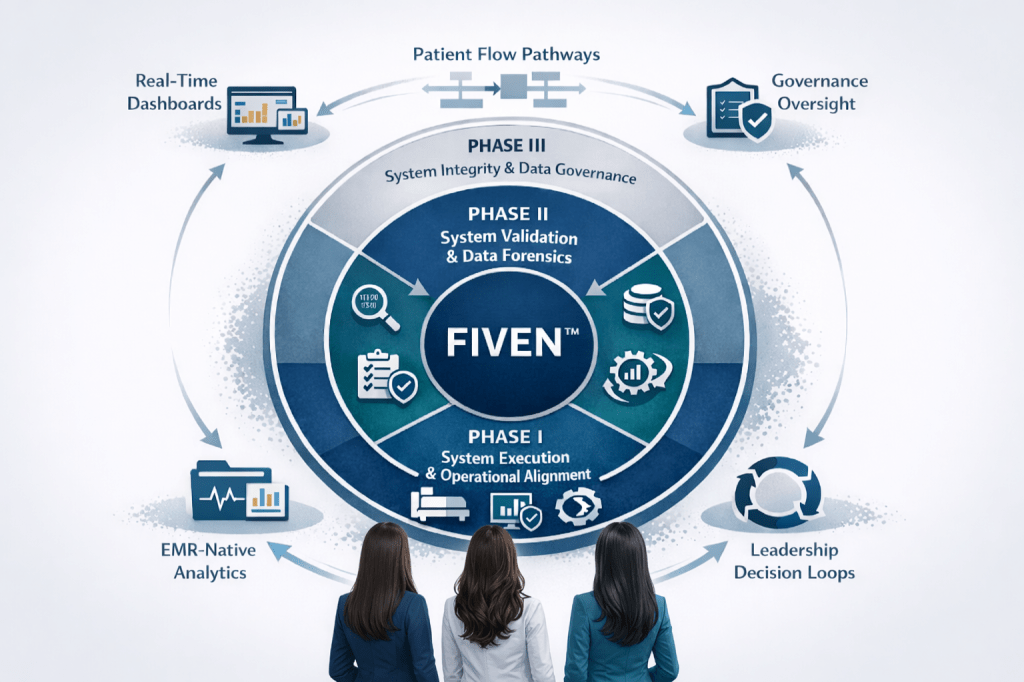
Fifth House Strategy supports healthcare organizations through a phased engagement designed to move from operational uncertainty to reliable, system-level performance. All engagements begin with Phase I, which establishes the validated data required for effective strategic action and sustained results. Organizations may continue into subsequent phases based on their goals.
Phase I – System Validation & Data Forensics
Create a trusted operational baseline (required)
Phase I establishes a shared, trusted understanding of how the system truly operates. Operational data is validated against real clinical workflows, metrics are aligned to actual patient movement, and constraints to flow and capacity are clearly identified. Leaders and teams gain a common operational picture and the confidence to prioritize action based on verified system reality.
What changes:
Decisions become informed, discussions become factual, and the organization gains clarity on which action will have the greatest impact.
Phase II – System Execution & Operational Alignment
Optimize flow efficiency & reliability (optional, builds on Phase I)
Phase II translates validated system insights into coordinated execution. Workflows, decision-making, and operational flow are aligned to patient needs and organizational priorities, with strategic action embedded into existing systems and governance. Friction and variation are reduced, accountability is clarified, and flow becomes more efficient and reliable across the system.
What changes:
Patient movement improves, teams operate with clearer ownership, and leaders gain confidence that the system is performing efficiently and as designed.
Phase III-System Integrity & Data Governance
Protect performance and enable confident technology decisions (optional, requires Phase I)
Phase III sustains performance by strengthening data integrity, governance, and internal capability. Teams are trained to maintain validated data, detect emerging variance, and understand how workflow or system changes affect performance. That same validated data becomes a reliable lens for evaluating current and new technologies—so leaders can assess whether tools will improve flow and execution before investing.
Governance is embedded to ensure data remains accurate, actionable, and owned by the organization as systems evolve.
What changes:
Performance holds under pressure, teams act earlier with confidence, and leaders evaluate current and new technologies using validated data—reducing risk, avoiding misaligned investments, and maintaining momentum without reliance on external oversight.
 fifthhousestrategy.com